


 View availability


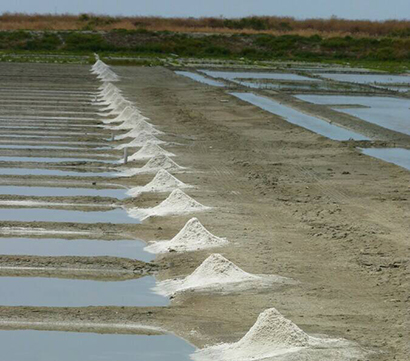
In the 19th century, one-fifth of the island was dedicated to salt production. After a decline in activity in the 20th century, the artisanal operation of salt marshes is now back in fashion, encouraging the establishment of new salt workers on Île de Ré.
Cycling through the Salt Marshes
All the salt marshes are located in the north of the island, all around the Fier d’Ars and the Loix trench. To discover the salt marshes, there’s nothing better than cycling. Île de Ré, with its 110 km network of cycle paths, is a cyclist’s paradise!
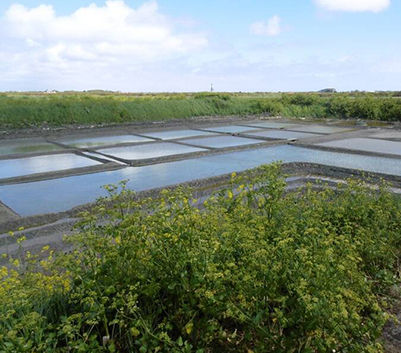
The marsh path is an 18 km route starting from La Couarde to Les Portes-en-Ré. The circuit winds through the checkerboard pattern of the Fier d’Ars marshes. In fine weather, bring a hat because there’s no shade along the route!
The cycle path crosses the Illeau des Niges nature reserve. It is managed by the LPO, the League for the Protection of Birds. Indeed, large colonies of birds come to nest in the Fier d’Ars marsh. The mudflats offer ideal conditions for resting and feeding migratory birds that stop there before continuing their long journey. Visit the Maison du Fier to learn all about the marsh’s fauna and flora.
The salt workers of Île de Ré
The salt marshes of Île de Ré have seen generations of salt workers. There were over 1000 salt workers on the island in the 19th century, producing 25,000 tons per year. Today, almost a hundred of them are bringing the marsh back to life and harvesting “white gold.”
Most of Île de Ré’s salt production takes place in Ars-en-Ré, where the salt workers’ cooperative is located. Salt is sold at the Cabane des Sauniers under the brand “Les Sauniers de l’île de Ré.”
While salt harvesting takes place in summer, the salt worker’s job lasts all year. In autumn, the salt accumulated on the mound is transported to the cooperative. Winter is a period of rest, also dedicated to restoring the marsh. In spring, it’s time to clean and prepare the marsh by letting it dry before refilling it for the next summer’s harvest.


How the marsh works
Shaped by monks from the 15th century, salt marshes are basins dug into natural clay, allowing water to flow from one to another by gravity.
From the ‘vasais,’ a seawater reserve basin where it decants, the salty water then circulates through the ‘métières’ to promote evaporation and concentrate the salt. It then enters the marsh field, which contains many small basins, and finally ends its journey in the ‘aires saunantes’ (salt-producing areas). On the surface, a thin layer of salt forms, known as ‘fleur de sel.’ Coarse salt is found at the bottom of the squares and will be collected last.
To learn all about how the marsh works and the salt worker’s profession, visit the salt marsh ecomuseum in Loix-en-Ré. A permanent exhibition traces the history of the Île de Ré salt marshes. The guide’s commentary around a model informs visitors about the techniques used to cultivate sea salt. Guided tours of an active marsh take place regularly throughout the day.

